×

Are your contact details up to date? Login to view and update your personal details for the upcoming financial year.


Council member profiles


Page last updated 27 October 2025

Meet our members


Dr Toby Gardner 
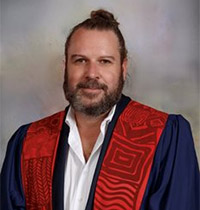
Dr Toby GardnerWhy did you join the Faculty Council?

I'd previously been on the Faculty Council as Bass representative in 2013/14, though had to step down due to other commitments. During COVID I became verry active in connecting a number of doctors across various specialities, and was engaged with a number of national groups navigating our way through COVID. given my relationships with GPs through my role as Supervisor Liaison Officer I was asked to join council again and was subsequently appointed as Deputy Chair. The rest is history!

What objectives do you have as a Council member?

As Chair my role is to represent our GP community in Tasmania and advocate for the advancement of healthcare in Tasmania and further afield. I have immensely enjoyed the role to date, and have seen our profession grow in strength and numbers during my time at the helm, though of course there's always more to be done.

What attracted you to a career in General Practice?

I love generalism and emergency medicine, though didn't enjoy the constraints of working in the public hospital system. General practice affords me a flexibility unrivalled by any profession, and has seen me go in different directions at numerous times in my careers, and I never stop learning. It truly is the best and most diverse of all the specialties.

What has been your best moment as a GP?

Best moments happen every day, though to me there is nothing more rewarding than the patient who credits you with saving their life.

What’s one thing you’ve learned that you think other GPs might benefit from?

That there's no point complaining about something if you're not prepared to put in the work to change it. We've demonstrated that in the RACGP, which has grown to be the most trusted medical voice in the media in Australia, and we certainly have the ear of government. And we are stronger when we work together.

What’s one thing we don’t know about you?

I love to DJ in my spare time, if I wasn't working in medicine I'd be a winemaker, and I plan to one day win the Archibald (when I can find some time to get painting again).


Dr Tim Jones – Deputy Chair 

A Prof Michael Fasher

Why did you join the Faculty Council?

I joined the Faculty Council because advocacy and support for members is becoming increasingly important to ensure the strengths and viability of our profession are preserved into the future.

What objectives do you have as a Council member?

My key objective as a Council member is to ensure that members feel connected to and well represented and supported in their endeavours.

What attracted you to a career in General Practice?

I chose general practice because we have the best patients- engaged and motivated people who we go ‘on the journey’ with. My patients keep me humble, teach me broad lessons about life and show me how integral a GP is to the wellbeing of a community.

What has been your best moment as a GP?

My best moment as a GP is a child patient with significant school fear self solving his challenge through wearing his special purple undies to school each day.

What’s one thing you’ve learned that you think other GPs might benefit from?

One thing I’ve learned in my work in child health is that we don’t have to have all the answers for families. We are great facilitators and enablers of our patients’ strengths. I firmly believe that all sustainable change in health is patient driven and clinician supported.

What’s one thing we don’t know about you?

My first word was ‘car’ and I’m a motoring tragic at heart.


Dr Chris Hughes - Censor

Dr Chris Hughes

Why did you join the Faculty Council?

In 1999 I was appointed the Exam Panel Chair for Tasmania. In those days operational management of the FRACGP Exams was done locally within each state faculty. As part of my appointment, I was asked to join the faculty board chaired by Prof Peter Mudge, a giant in the life of the RACGP and a generous and insightful mentor to us all.

What objectives do you have as a Council member?

In addition to voicing the needs of training and assessment within the local context my other role is to support both the Faculty Chair – Toby, the Deputy Chair – Alex and the local faculty as part of the executive.

What attracted you to a career in General Practice?

For me general practice was an opportunity to serve to improve the lives of those who had been somewhat left behind by circumstance and ‘the system’. At school I saw a careers councillor to ask advice around future subject choice and direction around eventual employment. I completed an aptitude test that came up with a career choice of social worker/chorus line performer. Obviously General Practice was a great fit!

What has been your best moment as a GP?

At a personal level, undoubtedly winning the Rose Hunt Medal in 2023.

When I took the call, from the President Nicole Higgins telling me that I had won the award, I thought initially it was about my non-attendance at a membership and board function in Hobart the previous week. I soon learnt that she had other things on her mind…

Whilst I believe that success in general practice is totally dependent upon the efforts of great teams rather than individuals, the award gave me my best opportunity I was ever going to get to thank all the clinicians and administrators that I have worked with at the RACGP and in our practice since 1981. It was also great to very publicly give heartfelt thanks for the unwavering support of my family over the years.

I worked at the Greenpoint Clinic leaving at the end of last year after 41 years. When I was one of three partners who owned the practice we were the first general practice in Australia to win the Tasmanian Practice of the Year twice!

My departure reaffirmed that GP recruitment is tough everywhere with an aging GP workforce at a time when there is a big disconnect between support for adequate numbers of GPs in training and the increasingly complex needs of an aging population. Late last year we and our patients went through a tough and uncertain time with changes around the ownership of our Practice, but I can now say, with great relief, that our practice is in new, energetic and compassionate hands.

What’s one thing you’ve learned that you think other GPs might benefit from?

Working in a variety of clinical and nonclinical settings is a particularly effective way to buffer oneself from the tougher parts of our work.

We all have a teaching responsibility at both an undergraduate and GP Registrar level to ensure the future of our profession. Academic GPs within universities are in a great position to inspire new graduates to make general practice their first choice for a fulfilling career in medicine.

The RACGP also offers many opportunities to enrich our work lives:

  • Become a GP Supervisor
  • Consider applying to the RACGP to train and become involved in the FRACGP Exam as an examiner, case writer, censor or exam segment coordinator

Similarly having a fulfilling life beyond medicine with outside interests and adequate leave enriches both our own and our families’ lives ensuring a better balance that supports longevity in a great profession.

What’s one thing we don’t know about you?

Living in a new house with much to do has improved my welding and paving skills to no end. I can’t wait to start building a bed with timber I have stored for more than 20 years. Yes, work was all consuming!

Soon the coast will be clear to travel to Quebec City for our son’s wedding and the Quebec Music Festival. Whilst our other son living here has a baby due later in the year.

In July I will travel to Hong Kong to attend the Conjoint Fellowship Ceremony where I have the great honour to deliver the Dr. Sun Yat Sen Oration.

I have much to look forward to!


Dr Jim Berryman - Provost

Dr Jim Berryman

Why did you join the Faculty Council?

I joined the council (again) after being asked if I would replace Jan Radford in the Provosts role. I previously enjoyed being part of the Tasmanian Faculty Council because of the collegiality and friendly nature of the wonderful Tasmanian Council and was happy to be involved again. My previous roles were as Braddon and Rural Council reps and co-deputy chair.

What objectives do you have as a Council member?

The Provost role is new to me so getting to know other Provosts across Australia with all of the shared experience will be my main objective. Being involved with the council is a great way to know what goes on behind the scenes, and I have now realised what a lot of work is done by the state manager and Toby before becoming a member of the executive council I really had no idea what a volume of work and the wide ranging nature of this occurred.

What attracted you to a career in General Practice?

I guess time and circumstance really! I trained at Otago medical school in Dunedin, NZ, and came across for a sea change in 1999. That was for a year! I was halfway through my Public Health Physician training and was a bit disillusioned so ended up working in NWRH Burnie. I think there had been a travelling roadshow and I remember a picture of a surfer type bloke on a wind surfer and thinking that looked pretty good. At the time we were shivering through a Dunedin winter with snow on the ground. That picture was definitely NOT taken in Burnie harbour!

However, when we arrived we drove West and came across Boat Harbour Beach and that looked like a nice place to live, and the local primary school was a small county school where we enrolled our two children. We stay on and all five of our children went to Boat Harbour Primary-having children essentially made us put down roots.

After a year in the NWRH I decided to apply for general practice training as that seemed far more enticing than a return to public health or any hospital speciality. I was one of the last group of registrars to train with the RACGP before the RTOs were created so have seen training take a full circle.

What has been your best moment as a GP?

Really the best moments are related to longitudinal care-I have been in this community for 24 years so have seen several generations of the same families in that time. Being involved as a medical educator and supervisor have also been great parts of being a rural GP. Being a part of the community has also added to the alure of small-town general practice.

What’s one thing you’ve learned that you think other GPs might benefit from?

Go where you want to live and become involved in the local community and treat your patients and staff as you want to be treated.

What’s one thing we don’t know about you?

I had a long carer as a registered nurse before becoming a doctor. I know that working as a nurse particularly in rural areas made me want to work rurally as a GP and also moulded my professional nature. In one small town in NZ (Blenheim, top of the South Island) in my early twenties and working in the small ICU/CCU the nurses were the ambulance crew for all medical emergency calls. Doing CPR, doing needle decompressions of traumatic pneumothoraxes and the like piqued my interest in rural health. Now there is a full time ambulance service


Advertising

Advertising